
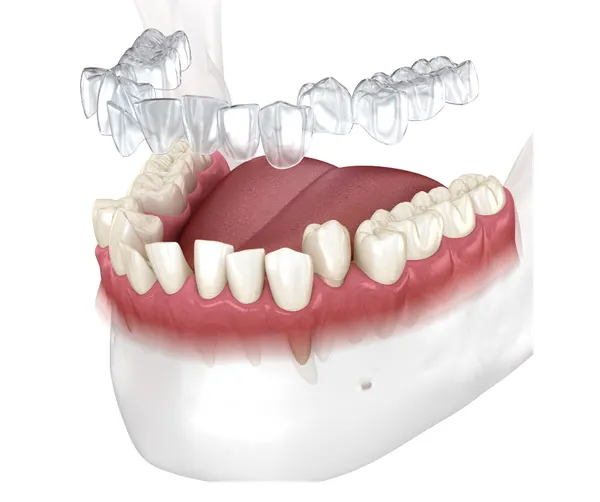
Adult Invisalign: Realistic Timeline
Adult Invisalign treatment typically takes 12 to 18 months, though some cases resolve in 6 months and complex cases may take 24 months or longer. The actual timeline depends on how many teeth need movement, how much movement is required, how well your bone responds to pressure, and how diligently you wear your aligners. Understanding realistic timelines and the factors that influence speed prevents disappointment and helps you plan accordingly.
Why Adult Orthodontics Takes Longer Than Teen Orthodontics
Teenagers typically complete braces or Invisalign treatment in 18 to 24 months. Adults often take longer. This is because adult bone is denser and less responsive to pressure than growing adolescent bone. The periodontal ligament (the tissue that anchors teeth to bone) also responds more slowly in adults. Teenagers' jaws and bones are still developing, which actually accelerates orthodontic movement.
This isn't a limitation specific to Invisalign; traditional braces take longer in adults too. It's a fundamental biological reality of adult orthodontics.
Realistic Timeline for Common Adult Cases
Minor crowding of front teeth (mild spacing or overlap): 4 to 8 months with Invisalign. This is the fastest type of case because only minor movement is needed and fewer teeth are involved.
Moderate crowding of front teeth with some bite correction: 8 to 12 months. This involves more teeth and may require slight rotation or vertical movement, which takes longer.
Severe crowding affecting multiple teeth: 12 to 18 months or longer. Complex movements affecting multiple teeth and the entire arch take time. Sometimes extractions are needed to create space, which adds complexity.
Bite correction (underbite, overbite, crossbite): 12 to 24 months depending on severity. Correcting bite problems often requires moving back teeth, which is slower than moving front teeth. Severe bite problems may require jaw surgery in addition to orthodontics.
Complex cases with multiple goals (crowding plus bite correction plus rotation): 18 to 24 months or longer.
Timeline of Visible Changes
Many patients are excited to see rapid changes and are disappointed if they don't see obvious differences immediately. Here's a realistic timeline for visible improvements:
- Weeks 1-2: Minimal visible changes. You'll feel the aligners working (gentle pressure), and your teeth may feel slightly loose or tender. Visible changes are not yet obvious.
- Weeks 2-4: Spacing between crowded teeth may become visible as they begin to separate. If your crowding was tight, you may start to see slight gaps where there wasn't space before.
- Weeks 4-8: More significant visual improvement. Crowded teeth are noticeably straighter. Spacing is more apparent. The overall alignment is improving visibly.
- Months 2-4: Significant improvement is obvious to you and people close to you. Friends and family may start to notice the change.
- Months 4-6: Very noticeable improvement. Most people will comment on your smile. The changes are obvious in photos.
- Months 6-12: Continued refinement. Bite problems may not be fully corrected yet, but tooth position is much improved.
- Months 12-18: Final refinement. Bite is corrected, spacing is perfected, rotation is complete.
Factors That Accelerate Invisalign Treatment
Excellent aligner compliance. Wearing aligners 20 to 22 hours per day (the recommended 22 hours) results in faster movement than wearing them 14 to 16 hours. Poor compliance literally slows treatment because teeth have less pressure and time to move.
Younger biological age. Patients in their 20s and 30s typically see faster movement than patients in their 50s and 60s. The response of bone to pressure diminishes with age.
No previous orthodontics. Teeth that have never been moved respond more readily to pressure than teeth that were previously straightened with braces. If you had braces as a teenager, your adult Invisalign treatment may be slightly slower.
Simpler tooth movements. Moving front teeth is faster than rotating molars or correcting bite. Simple cases move faster than complex cases.
Good oral health. Gum disease or bone loss can slow orthodontic movement. Keeping your gums healthy supports faster movement.
Factors That Slow Invisalign Treatment
Poor aligner compliance. Wearing aligners only 12 to 14 hours per day significantly slows movement. Some patients see minimal progress if they're not wearing aligners consistently.
Advanced biological age. Patients in their 60s or older may see slower movement than younger patients. Age isn't a contraindication to Invisalign, but movement is often slower.
Previous orthodontics. If your teeth were straightened with braces and then shifted over time, moving them again can be slower because the bone has memory of the previous position.
Complex tooth movements. Rotating teeth (turning them in the socket) takes longer than lateral movement. Correcting significant bite problems takes longer than simple alignment.
Periodontal disease. Bone loss from gum disease reduces the foundation for tooth movement. Treating gum disease before Invisalign is important.
Retention problems from previous treatment. If you previously had orthodontics and didn't wear your retainer, your teeth have shifted. Moving them back into correct position is slower than moving teeth that haven't shifted.
Monitoring Progress
You should change to a new aligner set every 7 to 10 days, depending on your treatment plan. At each change, you'll notice a new level of pressure and continued movement.
You'll have periodic check-in appointments (every 4 to 8 weeks) with your dentist or orthodontist. These appointments allow them to monitor progress, ensure you're on track, and make any adjustments to your treatment plan if needed.
Progress slows significantly if you're not wearing aligners enough. If you're supposed to change aligners every seven days but you're wearing each set for two weeks, your treatment will take twice as long. Compliance is crucial.
Dealing with Unexpected Delays
Sometimes treatment takes longer than expected. Common reasons include:
- Lost or damaged aligners requiring replacements (a week or two of delay).
- Unexpected bite problems requiring additional refinement.
- Teeth being stubborn about moving (some teeth are more resistant to movement than others).
- Unexpected bone resorption or other biological factors.
If your treatment timeline is extended, it's usually not a major problem, but it's disappointing. Ask your orthodontist to explain the delay so you understand whether it's expected (normal biological variation) or unexpected (a complication that needs addressing).
Planning Your Invisalign Timeline
If you're considering adult Invisalign, assume 12 to 18 months for a straightforward case. If you have a time-sensitive event (wedding, promotion, major presentation) planned within 9 months, discuss whether Invisalign is feasible. Simple cases might be finished in time; complex cases probably won't.
If you commit to Invisalign, plan for the full 12 to 18-month timeline and be pleasantly surprised if you're done sooner.
After Treatment: Retention
Once your Invisalign treatment is complete, you'll need to wear a retainer to prevent your teeth from shifting back. Most orthodontists recommend wearing a fixed (bonded) retainer on your lower front teeth permanently, and wearing a removable retainer (similar to an Invisalign aligner) nightly or several nights per week indefinitely. Without retention, teeth gradually shift back to their original positions over months to years.
The Bottom Line
Adult Invisalign treatment typically takes 12 to 18 months for straightforward cases, with more complex cases taking up to 24 months. Timeline depends on the severity of your crowding or bite problem, your age, your compliance with wearing aligners consistently, and individual biological factors. Visible improvements begin within weeks, with significant changes obvious after two to three months. Plan for the full timeline and discuss realistic expectations with your orthodontist at your consultation. With good compliance and patience, you can achieve a straightened smile as an adult without obvious braces.
Curious about Invisalign for your adult teeth? Schedule a consultation with Dr. Mercado to assess your timeline and options, or call (916) 448-5458.
Medical disclaimer: This article is for general educational purposes only and is not a substitute for professional dental or medical advice, diagnosis, or treatment. Individual results vary, and no specific outcome is implied or guaranteed. Always consult Dr. Mercado or another qualified healthcare provider about your specific situation. If you are experiencing a dental or medical emergency, call our office or 911.