
Porcelain vs. Composite Veneers: A Detailed Comparison
Porcelain veneers and composite veneers are both legitimate cosmetic restorations, but they're fundamentally different materials with different strengths, limitations, and long-term costs. Porcelain is stronger, more durable, and resists staining but requires tooth preparation and is harder to adjust if you change your mind. Composite is reversible, easier to adjust, and costs less upfront but stains more readily and requires periodic maintenance. Understanding the tradeoffs helps you choose the material that aligns with your priorities and commitment level.
What Porcelain Veneers Are
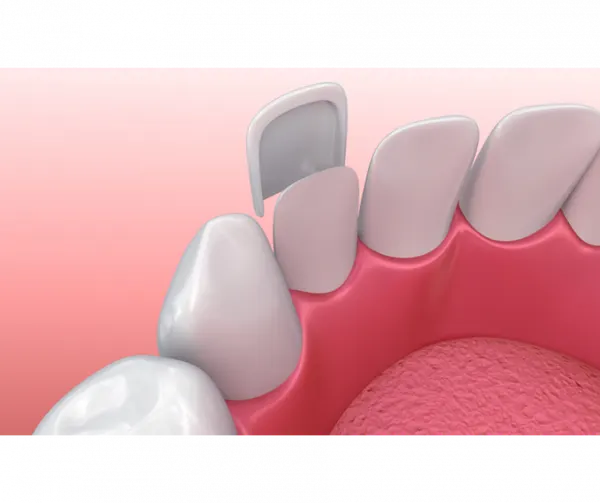
Porcelain veneers are thin shells of dental ceramic (typically a feldspathic or lithium disilicate ceramic) that are custom-made in a laboratory and permanently bonded onto the front surface of your teeth. The fabrication happens off-site by a dental technician who receives specifications from your dentist about shade, shape, size, and any customization.
Porcelain is extremely hard and durable. It resists fracture, doesn't discolor or stain, and maintains its color and gloss indefinitely with proper care. A porcelain veneer placed at age 35 will look essentially identical at age 50 if it hasn't been traumatized.
The tradeoff is that porcelain veneers require tooth preparation. Your dentist must remove enamel and some dentin from the front of your tooth to create space for the veneer and to shape the tooth to accommodate the veneer. This preparation is permanent and irreversible. Once your tooth is prepared, you need a veneer on that tooth for the rest of your life, or at minimum until another veneer can be bonded.
What Composite Veneers Are
Composite veneers (also called bonded veneers or direct veneers) are made of tooth-colored composite resin, a plastic-like material that's mixed and applied directly to your tooth in the dentist's chair. The dentist sculpts the composite to achieve the desired shape, then hardens it with a blue light. No laboratory work is required.
Composite is weaker than porcelain. It's porous and absorbs stain, so composite veneers will gradually darken or develop a dingy ring around the edge over five to seven years. Composite also wears more readily, showing fine scratches or becoming duller over time. However, composite is easily adjustable and repairable. If you don't like the shape, your dentist can sand it and reshape it immediately. If you change your mind completely, your dentist can remove the composite and return your tooth to its original state.
Cost Comparison
The upfront cost difference is substantial. Composite veneers cost considerably less per tooth than porcelain veneers. At face value, composite is the obvious financial choice.
But the lifetime cost equation is different. Composite veneers need touching up every 5 to 7 years and eventually need full replacement. If you get composite veneers at age 35 and replace them every six years, you'll have paid for the work four to five times by age 65 to 70. Porcelain veneers, placed once at age 35 and replaced once at age 55 to 60, represent a more efficient long-term investment for most people.
However, if you're young and uncertain about your long-term aesthetic goals, or if you have limited budget, composite is a sensible starting point. You can try a cosmetic change at lower cost and lower commitment, then upgrade to porcelain later if you're happy with the direction.
Aesthetic Quality and Optical Properties
Porcelain has superior optical properties. Porcelain mimics the translucency, depth, and light-handling characteristics of natural enamel. A well-made porcelain veneer looks genuinely like a tooth, with subtle color gradations and depth that composite cannot achieve.
Composite, while it can look attractive immediately after placement, lacks this optical sophistication. It appears flatter and more plastic-like compared to porcelain. Additionally, composite becomes noticeably darker and more opaque as it stains, making the color change more obvious than with porcelain.
For a dramatic shade change (covering dark, stained, or discolored teeth), porcelain is typically the better choice because it provides better masking power and won't discolor over time. For smaller aesthetic improvements, composite can deliver good short-term results.
Preparation Requirements
Traditional porcelain veneers require tooth preparation. Your dentist removes roughly 0.5 to 1 millimeter of tooth structure to create space for the veneer. This is the irreversible aspect of porcelain veneers.
No-prep or minimal-prep porcelain veneers are available but are limited to specific cases. They work only on teeth with adequate existing enamel and when minimal color change is needed. Most patients cannot have true no-prep veneers because the clinical situation requires some tooth preparation.
Composite bonding doesn't require tooth preparation in traditional bonding. Your dentist can apply composite directly to your existing tooth surface without removing any tooth structure. However, to create adequate space for the composite and to achieve proper contour, some light surface roughing or modification is usually done, though this is much less invasive than veneer preparation.
Maintenance and Durability
Porcelain veneers require minimal ongoing care beyond normal oral hygiene. You brush, floss, and have regular checkups. The veneers don't need special products or extra attention. Their main vulnerability is extreme trauma (chewing ice, opening packages with teeth, hard impacts), which can crack the veneer or the underlying tooth.
Composite veneers require active maintenance. You benefit from avoiding dark beverages (coffee, red wine) though staining will eventually occur. You should schedule periodic touch-ups with your dentist every 12 to 18 months to polish the surface and recontour the edges before wear becomes obvious. Without this maintenance, composite veneers become increasingly dingy and worn.
Composite is also more prone to edge staining. Even if you avoid dark beverages, the edge where the composite meets your tooth tends to develop a fine dark line over time as plaque infiltrates the margin and the composite becomes slightly porous.
Reversibility and Adjustability
Composite is fully adjustable and reversible. During your appointment, your dentist can sand and reshape the composite immediately if you're unhappy with the shape or contour. If you decide weeks or months later that you want the composite removed, your dentist can sand it away and return your tooth to its original state (though some adhesive residue may remain).
Porcelain is neither adjustable nor reversible. Once bonded, a porcelain veneer cannot be reshaped without breaking it. If you're unhappy with the result, your only option is to have the veneer removed and replaced, which is time-consuming and costly per tooth for replacement. The underlying tooth has been prepared, so you cannot return to its original state; a new veneer must be bonded on.
If you're uncertain about your aesthetic goals or if you want to test a cosmetic change before committing, composite is the more flexible choice.
Longevity Expectations
Porcelain veneers, with proper care and maintenance, last 15 to 20 years. Some last even longer. The limiting factors are usually wear at the edges, changes in the underlying tooth structure, or traumatic damage to the veneer itself.
Composite veneers last 5 to 8 years in active use, with touch-ups extending that timeline. Most practitioners recommend touch-ups every 5 to 7 years and full replacement every 8 to 10 years. The material simply doesn't have the durability of porcelain.
How to Decide Between the Two
Choose porcelain if you want a permanent, durable solution that requires minimal maintenance; if you're dealing with severe discoloration; if you want superior aesthetics and optical quality; if your bite is stable and you're not expecting major changes; or if you're committed to long-term cosmetic maintenance of your teeth.
Choose composite if you want to test a cosmetic change before permanent commitment; if your budget is limited; if you want adjustability and reversibility; if you're young and your bite or facial structure may change; or if you only need minor adjustments to one or two teeth.
Some patients choose composite first, wear it for a few years, and then upgrade to porcelain after they're confident in the direction. This hybrid approach provides the benefits of testing before permanent commitment and then upgrading to a more durable option once you're satisfied with the aesthetic direction.
The Bottom Line
Porcelain and composite veneers serve different needs and have different strengths. Porcelain is more durable, more beautiful, and more permanent. Composite is more flexible, more affordable, and more reversible. The right choice depends on your priorities (permanence vs. flexibility), your budget, your aesthetic goals, and your commitment level. A skilled cosmetic dentist can help you determine which material makes sense for your specific situation and goals.
Uncertain which veneer material is right for you? Schedule a consultation with Dr. Mercado to explore both porcelain and composite options, or call (916) 448-5458.
Medical disclaimer: This article is for general educational purposes only and is not a substitute for professional dental or medical advice, diagnosis, or treatment. Individual results vary, and no specific outcome is implied or guaranteed. Always consult Dr. Mercado or another qualified healthcare provider about your specific situation. If you are experiencing a dental or medical emergency, call our office or 911.