
TMJ Treatment Options Worth Considering
The temporomandibular joint (TMJ) is the hinge joint connecting your lower jaw to your skull. Most people never think about it. But when it goes wrong, it's impossible to ignore. TMJ disorders cause pain in the joint itself, clicking or popping sounds, limited mouth opening, headaches, and neck pain. What makes TMJ disorders complicated is that the causes are varied and the treatments are not always straightforward. But multiple effective approaches exist to manage the condition and restore function.
Anatomy and Function of the TMJ
The TMJ is a complex joint. Unlike most joints (like your knee or elbow) that are simple hinges, the TMJ combines a hinge motion with a sliding motion. When you open your mouth, the lower jaw first hinges open at the joint, then the jaw disc slides forward. This dual motion allows the wide opening needed for eating and speaking.
The joint is surrounded by muscles, ligaments, and a cartilage disc that cushions and distributes force. If any component of this system is out of alignment, inflammation develops, pain results.
What Causes TMJ Disorder
TMJ disorder is multifactorial. It's rarely caused by a single factor; usually, multiple contributors combine to create dysfunction.
Malocclusion (Bite Problems)
If your upper and lower teeth don't align properly, your jaw muscles work harder to achieve function. This muscle overuse and jaw positioning that deviates from the joint's optimal alignment can trigger TMJ disorder. Severe crowding, deep bite, or open bite all create bite problems that stress the joint.
Muscle Tension and Parafunctional Habits
Clenching and grinding (bruxism) overload the TMJ. Habits like chewing on pens, your cheek, or hard candy, or holding your phone between your shoulder and ear create repetitive stress. Postural issues (forward head posture from looking at screens) strain the joint.
Stress and Anxiety
Emotional stress manifests as muscle tension. The jaw muscles tense in response to stress, and chronic tension creates dysfunction. This is why TMJ disorder flares often occur during stressful periods.
Trauma
A blow to the jaw, a car accident, or other trauma can directly injure the joint or alter jaw alignment, triggering dysfunction.
Arthritis
Osteoarthritis or rheumatoid arthritis can affect the TMJ, causing pain, stiffness, and dysfunction. This is a structural problem requiring different management than muscle-based TMJ disorder.
Disc Problems
The cartilage disc in the joint can become displaced or damaged. This can cause clicking, popping, or limiting of jaw opening. Disc problems often develop from chronic stress on the joint but sometimes occur for unclear reasons.
Signs and Symptoms of TMJ Disorder
TMJ symptoms vary, but common ones include:
- Pain or tenderness in the jaw joint, especially in front of the ear
- Pain in the temples, cheeks, or neck
- Clicking or popping sounds when opening or closing your mouth
- Jaw locking or limited opening (you can't open your mouth fully)
- Headaches, often worse in the morning or after stressful days
- Earache or ear fullness
- Difficulty chewing
Not everyone with TMJ noise has TMJ disorder. Clicking is common and often causes no pain; it can be left alone. But if clicking accompanies pain, limited opening, or other symptoms, treatment is warranted.
Diagnosis
TMJ disorder is diagnosed clinically based on symptoms and physical examination. Dr. Mercado will assess:
- Where your pain is and when it occurs
- How wide you can open your mouth
- Whether sounds (clicking, popping) occur during movement
- Whether your jaw deviates when opening
- Whether your muscles are tender to palpation
- Your bite and alignment
Imaging (X-rays or MRI) is sometimes needed to assess for disc displacement or arthritic changes, but usually a careful clinical examination is sufficient to diagnose TMJ disorder and recommend initial treatment.
Conservative Treatment Options
Most TMJ disorder improves with conservative (non-surgical) approaches. Surgery is rare and reserved for specific cases where conservative treatment has failed.
Rest and Activity Modification
Resting your jaw (soft foods, avoiding wide opening, no chewing gum) often improves symptoms. The idea is to reduce stress on the joint while inflammation subsides.
Modifying habits that stress the joint matters: avoid hard or chewy foods, avoid opening your mouth extremely wide, stop nail-biting or pencil-chewing, improve your posture, and put your phone down rather than craning your neck to talk.
Heat and Ice
Moist heat (warm compress) applied to the jaw for 15 to 20 minutes helps relax muscles and improve pain. Ice is sometimes used if inflammation is acute. Most people find heat more helpful for chronic TMJ issues.
Jaw Exercises and Physical Therapy
Specific jaw exercises strengthen muscles and improve joint function. A physical therapist can teach stretching and strengthening exercises targeted to your specific dysfunction. These exercises take time to help (weeks to months) but are effective for many patients.
Stress Reduction
Since stress triggers muscle tension and TMJ pain, managing stress reduces symptoms. Meditation, yoga, therapy, or simply identifying and reducing stressors helps many patients.
Occlusal Splints (Night Guards)
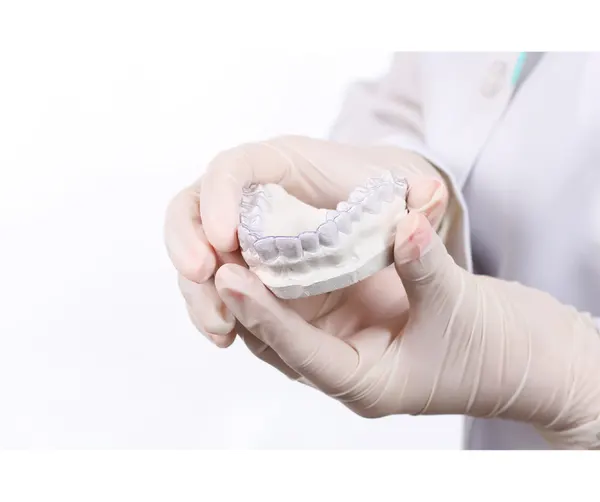
A custom-fitted night guard reduces clenching and grinding that stress the joint. Some splints are designed specifically for TMJ function, positioning the jaw in a more neutral position and stabilizing the joint. A TMJ splint is different from a simple bruxism guard; it's designed specifically to manage TMJ disorder.
Night guards are effective for many TMJ patients, especially those whose disorder is related to parafunctional habits.
Anti-Inflammatory Medications
NSAIDs (ibuprofen, naproxen) reduce inflammation and pain. Short-term use (one to two weeks) is often sufficient. Longer-term use should be discussed with your physician.
Muscle Relaxants
Short-term use of muscle relaxants (like cyclobenzaprine) can help patients whose TMJ disorder is primarily muscle-based. These are typically used for one to two weeks, not long-term.
Bite Correction (Orthodontics)
If your bite is contributing to TMJ dysfunction, correcting it with Invisalign or braces can improve the condition. This is a longer-term approach but addresses an underlying cause rather than just symptoms.
Botox Injections
Botox injected into the masseter and temporalis muscles (muscles of mastication) can reduce muscle tension and grinding-related pain. Effects last 3 to 4 months, then are repeated. This is not a permanent solution but provides relief for some patients, especially those with severe clenching.
When Specialist Referral Is Needed
If conservative treatment doesn't improve symptoms after 2 to 3 months, or if symptoms suggest structural problems (locking, severe limitation of opening), referral to a TMJ specialist (oral surgeon or TMJ-focused dentist) is appropriate. Specialists can assess for disc displacement, perform more advanced imaging, or recommend more invasive treatments if needed.
Advanced Treatments (Rarely Needed)
Arthrocentesis (washing out the joint), arthroscopy (using a camera to visualize and treat the joint), or open joint surgery are reserved for severe cases where conservative treatment has failed. These procedures are not first-line treatment and are rarely needed.
The TMJ Treatment Approach
A stepwise approach works best:
- Diagnose the specific cause (muscle-based, bite-based, trauma-related, arthritic, etc.)
- Start conservative treatment (rest, heat, exercises, bite guard, stress reduction)
- Evaluate response after 4 to 6 weeks
- If improving, continue and reinforce good habits
- If not improving, consider adding treatments (bite correction, specialist referral, advanced imaging)
- Reserve surgery for cases where conservative treatment has comprehensively failed
The good news is that most patients improve significantly with conservative treatment. Surgery is rarely needed, and most of the time, TMJ disorder is manageable with relatively simple, affordable interventions.
Long-Term Management
Even after TMJ symptoms resolve, maintaining good habits is important to prevent recurrence. Continue your night guard if you grind. Maintain good posture. Manage stress. Avoid parafunctional habits. These habits keep your TMJ healthy long-term.
The Bottom Line
TMJ disorder is common and usually manageable with conservative treatment. Diagnosis, a custom night guard, rest, exercises, and stress management resolve symptoms for most patients. If you're experiencing jaw pain, clicking, or limited opening, contact Dr. Mercado for evaluation and a treatment plan tailored to your specific situation.
Experiencing jaw pain or TMJ symptoms? Reserve a consultation with Dr. Mercado, or call (916) 448-5458.
Medical disclaimer: This article is for general educational purposes only and is not a substitute for professional dental or medical advice, diagnosis, or treatment. Individual results vary, and no specific outcome is implied or guaranteed. Always consult Dr. Mercado or another qualified healthcare provider about your specific situation. If you are experiencing a dental or medical emergency, call our office or 911.