
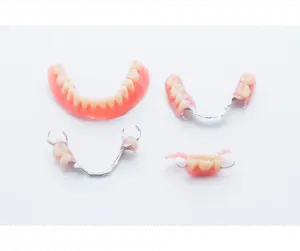
All-on-4 Alternatives: A Considered Look
All-on-4 is a trademarked protocol for full-mouth dental implant rehabilitation using four implants per arch to support a fixed prosthetic. It's been heavily marketed as the revolution in implant dentistry, and it genuinely works well for appropriate candidates. But it's not a one-size-fits-all solution. For some patients, other approaches yield better long-term outcomes, better aesthetics, or better cost-benefit ratios. Understanding these alternatives allows you to make an informed decision about what works best for your specific situation.
What All-on-4 Actually Is
All-on-4 uses four implants strategically positioned in remaining bone to support a fixed prosthesis (a bridge that looks like natural teeth). Two implants are placed in the anterior region with vertical angulation. Two are placed in the posterior region with significant angulation to maximize contact with available bone and eliminate the need for bone grafting in most cases.
The angulation allows the posterior implants to use the available bone height without extending into the sinuses (upper arch) or inferior canal (lower arch). This was genuinely innovative when it emerged in the 1990s, as it offered a fixed restoration without the need for extensive bone grafting.
All-on-4 is most commonly done as a same-day or next-day procedure: implants are placed and a temporary prosthesis is delivered the same day, allowing immediate function and esthetics. This is powerful marketing and genuinely valuable for patients who want immediate results.
The Limitations of All-on-4
Despite its popularity, All-on-4 has significant limitations that aren't always discussed upfront.
Biomechanical Challenges
Four implants supporting a full arch of teeth is biomechanically aggressive. The cantilever (the portion of the prosthesis extending beyond the most posterior implant) generates significant stress on the implants and their supporting bone. This stress can lead to implant loosening, screw fracture, or bone loss over years.
Some patients experience excellent long-term outcomes with All-on-4; others develop complications within 5 to 10 years. The longevity depends heavily on implant quality, prosthesis design, bone quality, and patient maintenance.
Esthetic Limitations
Because All-on-4 uses only four implants with fixed positions, the esthetic design of the prosthesis is constrained. If you want teeth in certain positions or with specific shapes, the fixed implant locations might not accommodate them. Some patients end up with teeth in positions that don't match their facial anatomy ideally.
Additionally, the gingival (gum) portion of the prosthesis is made of acrylic, which is visible and less esthetic than natural gum tissue. Over time, the acrylic can discolor or develop surface irregularities.
Maintenance and Repair
An All-on-4 prosthesis is a complex bridge with components that can break. If a tooth breaks, a screw loosens, or the internal structure fractures, the entire prosthesis might need to be removed for repair. Some repairs take days; others take weeks. You could be without teeth during this time unless a temporary solution is arranged.
Additionally, because the prosthesis is bonded or screwed onto the implants, cleaning underneath it can be challenging. Plaque can accumulate in areas you can't reach, potentially leading to peri-implantitis.
The Six-Implant Alternative
A popular alternative is the six-implant approach, sometimes called "All-on-6" or simply a more distributed implant-supported bridge. Using six implants instead of four provides several advantages.
Improved Load Distribution
Six implants distribute the load of chewing more evenly than four. This reduces stress on each individual implant and on the bone around them. Biomechanically, this is superior to All-on-4.
Reduced Cantilever
With six implants, the cantilever (overhang) is reduced, further decreasing stress on the distal implants and bone. This improves long-term stability.
Better Esthetic Positioning
With six implants, there's more flexibility in positioning them to match your facial anatomy and desired tooth positions. This allows more precise esthetic design.
Redundancy
If one implant were to fail in a six-implant case, the other five could potentially support the prosthesis while the failed implant is addressed. In a four-implant case, losing one implant significantly compromises the entire system.
The Tradeoff
Six implants cost more than four (more surgical time, more implant fixtures, potentially more bone grafting). If bone quality and quantity support All-on-4, the extra cost might not be justified. If bone is compromised, the extra implants make more sense. Dr. Mercado will assess your specific anatomy and recommend the approach with the best risk-benefit ratio for you.
The Eight-Implant or Full-Arch Approach
Some patients benefit from even more implants: eight or more implants per arch, sometimes combined with individual tooth restorations rather than a single bridge. This approach is typically reserved for patients with excellent bone and higher budgets, but it offers maximal esthetics and potentially better long-term outcomes.
With eight implants, each tooth gets its own support. This eliminates cantilever entirely. Each tooth can be individually designed to match the adjacent natural teeth perfectly. Cleaning is easier because individual crowns don't have the undercuts and crevices that bridges have.
The drawback is cost and surgical complexity, but for patients who want the absolute best long-term esthetics and function, this is the gold standard.
Removable Implant-Supported Dentures
For patients who want implant support but not a fixed bridge, a removable implant-retained denture is an option. This denture is supported by implants but is removed daily for cleaning, much like a traditional denture.
Typically, four to six implants are placed, and a denture is fabricated with snap attachments that engage the implants. The denture clips onto the implants firmly but can be removed.
Advantages
- Lower cost than a fixed bridge
- Easier to clean (you remove it daily)
- Easier to repair (damage to the denture is usually fixable without removing implants)
- Provides esthetic gingival tissue (the pink portion looks natural)
Disadvantages
- Less stable than a fixed bridge during chewing
- Requires daily removal and cleaning
- Still has acrylic, which can discolor
- Not suitable if you want a purely fixed solution
This option is underutilized because marketing emphasizes "permanent" solutions, but for many patients, a removable implant-retained denture is superior to All-on-4 in terms of maintenance, repairability, and long-term cost.
Traditional Complete Dentures
For budget-constrained patients, traditional complete dentures (not implant-supported) remain a legitimate option. Modern dentures are better than ever, with improved materials, better retention, and better esthetics. They're not implant-supported, so they rely on bone resorption for retention. But they're inexpensive, easy to repair, and work reasonably well for many patients.
If cost is your primary concern and implants aren't feasible, a high-quality complete denture is worth consideration. However, if you've committed to implants, combining them with a denture (hybrid approach) or going with individual implants is better than reverting to a purely traditional denture.
The Hybrid Approach
Some patients benefit from a hybrid solution: implants in the anterior region supporting individual crowns for esthetics, and a removable denture in the posterior for function. This combines the strengths of both approaches.
For example, a patient might get implants in the lower front region (where visibility and confidence matter most) and wear a removable denture extending posteriorly. This is more affordable than full implants, provides the esthetic benefit where it matters most, and maintains the ease of maintenance of a removable prosthesis.
Bone Grafting vs. Angulation
All-on-4's main selling point is that it often avoids bone grafting by using angled implants to maximize bone use. However, if your bone is severely deficient, even All-on-4 might require grafting. Conversely, if your bone is adequate, you might not need All-on-4 at all; traditional vertical implant placement with bone grafting might be superior.
The decision between bone grafting and tilted/angled implants depends on your specific anatomy. Dr. Mercado will evaluate your bone volume and recommend the approach most likely to succeed long-term.
Choosing the Right Approach for You
Consider these factors:
- Your bone quality and quantity: Poor bone might necessitate All-on-4 or grafting. Good bone gives you more options.
- Your esthetic priorities: If tooth position and gum esthetics are paramount, individual implants or more implants with less cantilever are superior.
- Your budget: More implants cost more. If cost is a limiting factor, All-on-4 or removable hybrid approaches are more affordable.
- Your maintenance tolerance: A fixed bridge requires professional cleanings; removable dentures require daily care. Know which you prefer.
- Your timeline: All-on-4 offers same-day function. Other approaches require months for full restoration. Know whether immediate function matters.
- Your long-term vision: Do you want a purely fixed solution for life? Are you willing to accept removable prosthetics? Know your preference.
The Bottom Line
All-on-4 is an excellent solution for the right patient. But it's not the only solution, and it's not automatically the best solution for every edentulous patient. Alternatives like six implants, removable implant-retained dentures, or hybrid approaches might offer better outcomes, better esthetics, or better cost-benefit ratios for your specific situation. Discuss all options with Dr. Mercado during a comprehensive consultation. The time invested in exploring alternatives leads to better long-term satisfaction.
Considering full-mouth implant restoration in Sacramento? Reserve a private consultation with Dr. Mercado, or call (916) 448-5458.
Medical disclaimer: This article is for general educational purposes only and is not a substitute for professional dental or medical advice, diagnosis, or treatment. Individual results vary, and no specific outcome is implied or guaranteed. Always consult Dr. Mercado or another qualified healthcare provider about your specific situation. If you are experiencing a dental or medical emergency, call our office or 911.