
The Dental Implant Healing Timeline
Dental implant treatment spans months, not weeks. Understanding this timeline is crucial because it explains why you can't have a fully functional tooth immediately after implant placement, why you need temporary solutions, and why patience is genuinely necessary for long-term success. The timeline isn't arbitrary; it reflects the biological processes your body must complete to integrate a foreign object and create a stable foundation for a permanent restoration.
The Initial Consultation and Planning Phase
Before surgery, you'll have a comprehensive consultation where Dr. Mercado assesses your overall health, evaluates your bone and soft tissue, reviews your bite and jaw relationships, and discusses your aesthetic and functional goals. If bone grafting is necessary (which is common when a tooth has been missing for a while), grafting can be done either immediately at extraction or as a separate procedure beforehand.
Cone beam CT imaging is typically performed to evaluate bone dimensions and anatomy precisely. 3D surgical planning software allows Dr. Mercado to determine the exact position, angle, and depth of the implant, ensuring it's placed optimally for longevity and aesthetics.
This phase takes one to four weeks, depending on whether bone grafting is needed and whether additional imaging or assessment is required.
Surgical Implant Placement: Week 0
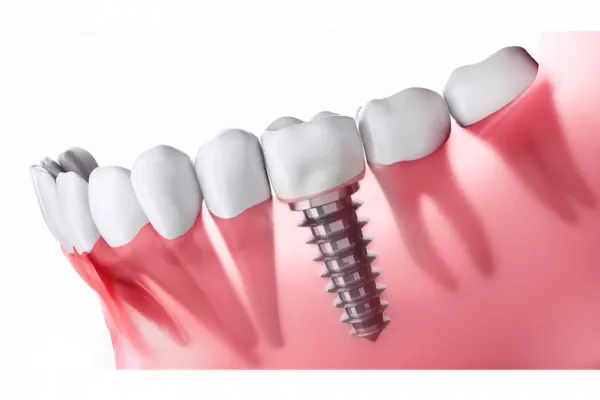
On surgery day, you'll receive local anesthesia and sometimes sedation to keep you comfortable. Dr. Mercado makes a small incision in the gum, prepares the bone using precision drills, and inserts the implant fixture (a small titanium screw) into the bone. A healing cap or temporary cover is placed over the implant. The incision is closed with sutures, and you're sent home with post-operative instructions.
The procedure typically takes 30 to 60 minutes per implant. You'll be numb throughout, though you'll feel pressure and hear mechanical sounds. Most patients experience manageable discomfort afterward; strong pain is unusual and should be reported immediately.
What Happens Immediately After Placement
Your jawbone has now received a foreign object, and your body's response is inflammation. Swelling peaks around day two to three, then gradually decreases over the next week. You'll take antibiotics to prevent infection and pain medication as needed. You'll rinse gently with salt water, avoid disturbing the site, and eat soft foods.
You should rest for the remainder of surgery day and take it easy for the first three to five days. Many patients return to light duties after a few days and normal activities within a week, though you should avoid intense exercise or heavy lifting for at least a week.
Early Integration: Weeks 1 to 4
During this phase, your body is beginning to integrate the implant. Sutures are removed at about the one-week mark. Swelling has largely subsided by week two. You're monitoring the site carefully, continuing antibiotics if prescribed, and using salt water rinses.
Biologically, your bone cells are beginning to make contact with the titanium surface of the implant. This process, called osseointegration, is still in its early stages. The implant is not yet stable enough to bear load (chewing forces). It must remain undisturbed.
You should avoid touching or putting pressure on the implant site. If temporary prosthetics are needed (if the implant is in a visible area), they must not place pressure on the implant. A temporary denture or bridge can be used instead, floating away from the implant.
The Critical Integration Phase: Weeks 4 to 16
This is the most important phase. Over the next 3 to 4 months, your bone aggressively integrates with the titanium implant. New bone forms directly on the implant surface, creating a strong biological bond that will support the restoration and last decades if maintained.
By week four, the majority of initial healing is complete and your mouth feels largely normal. You can resume normal eating (nothing extremely hard) and normal oral hygiene (gentle around the implant site). You're no longer restricted in any significant way, but the implant is still integrating and must remain undisturbed.
This phase requires patience and good oral hygiene. Don't skip follow-up appointments. Dr. Mercado will monitor your healing and assess integration progress at visits. If you're a smoker, quitting during this phase significantly improves integration rates; smoking constricts blood vessels and impairs healing.
Timeframe Variation
Standard protocol is 3 to 4 months for the lower jaw (bone is denser and integrates faster) and 4 to 6 months for the upper jaw (bone is less dense and integrates more slowly). Some modern implant systems claim faster integration through surface modifications, but Dr. Mercado follows conservative, proven protocols: placing implants in proven systems and allowing biological time for integration regardless of marketing claims.
Abutment Placement: Months 4 to 6
Once integration is complete, it's time to restore the implant. This begins with abutment placement, a brief appointment where Dr. Mercado removes the healing cap from the implant and places an abutment (a small post that extends above the gum line). This creates a connection point for the crown.
The abutment is either pre-fabricated (if it's a standard size) or custom-designed and milled to match your tooth positions and aesthetic requirements. If custom, there's a lead time of one to two weeks for fabrication.
After abutment placement, you might notice a small amount of bleeding or seeping from around the abutment for a few days as the soft tissue adapts. This is normal. You'll rinse gently and continue normal oral hygiene.
Crown Fabrication: Months 5 to 7
After the abutment is stable (usually one to two weeks), impressions are taken of the abutment and your bite. Using these impressions, a custom porcelain crown is fabricated to match your other teeth in color, shape, and size.
The crown fabrication typically takes one to three weeks. While you're waiting, you might wear a temporary crown to maintain aesthetics and function, or you might go without if the implant is in a non-visible area.
Once the final crown is ready, Dr. Mercado will seat it, verify your bite, ensure it's properly contoured, and make any adjustments needed. The crown is then either cemented (permanently bonded to the abutment) or screw-retained (held in place by a screw through the crown into the abutment). Both methods have advantages; Dr. Mercado will discuss which is appropriate for your case.
Delivery and Final Adjustment: Month 6 to 7
At delivery, your implant crown is in place, your bite is verified, and you have a fully functional tooth that looks and feels natural. You should experience no significant discomfort at this point. If you do, contact the office immediately; improper bite or crown contours should be corrected.
You'll receive instructions on caring for your implant crown: it's real porcelain and can break if you bite extremely hard or expose it to extreme temperature changes (don't bite ice or go from very hot to very cold foods). You brush and floss it like a natural tooth.
Long-Term Monitoring: Months 8+
After delivery, your work isn't done, but your effort shifts to maintenance. Regular dental visits (usually twice yearly) are essential to monitor the health of the implant, the surrounding bone, and the soft tissues. Dr. Mercado will take periodic X-rays to ensure the bone level is stable. You'll maintain meticulous oral hygiene, flossing around the implant daily.
Long-term care and maintenance determine the lifespan of your implant. With good care, implants routinely last 20, 30, or more years.
Complete Timeline Summary
- Weeks 0 to 1: Surgery, healing, suture removal
- Weeks 1 to 4: Early integration, swelling resolves
- Weeks 4 to 16 (3-4 months lower, 4-6 months upper): Critical osseointegration phase
- Months 4 to 6: Abutment placement and soft tissue adaptation
- Months 5 to 7: Crown fabrication
- Months 6 to 8: Final crown delivery and adjustment
- Month 8+: Long-term maintenance and monitoring
Total Timeline
From implant placement to a fully functional, finished crown, expect 6 to 8 months for routine cases. If bone grafting was necessary beforehand, add 4 to 6 months. If you're having multiple implants, each implant follows the same timeline; they can be done simultaneously or staggered depending on your situation and preferences.
Factors That Can Extend the Timeline
Smoking delays integration significantly; quitting before surgery improves outcomes. Uncontrolled diabetes impairs healing; optimizing blood sugar control beforehand is important. Certain medications can affect bone healing. Poor oral hygiene increases infection risk. If infection occurs or if integration isn't progressing normally, additional time is needed.
Some patients experience excellent integration and move quickly; others have slower healing and require longer timelines. Individual biology varies. Dr. Mercado will monitor your specific healing and adjust the timeline if necessary.
Why You Can't Rush the Timeline
Placing a crown on an implant that hasn't fully integrated risks failure. Loading an unstable implant can disrupt the osseointegration process and lead to bone loss around the implant. This is why the timeline exists; it's based on biological necessity, not inconvenience.
Early implant systems had much higher failure rates when crowned before full integration. Modern systems are more forgiving, but conservative timing remains the gold standard for predictable long-term success.
The Bottom Line
Dental implants are a long-term investment that requires patience. The timeline is measured in months, not weeks, because your bone needs time to create a stable foundation. This upfront patience is what makes implants reliable for decades afterward. The wait is worth it.
Considering dental implants in Sacramento? Reserve a private consultation with Dr. Mercado, or call (916) 448-5458.
Medical disclaimer: This article is for general educational purposes only and is not a substitute for professional dental or medical advice, diagnosis, or treatment. Individual results vary, and no specific outcome is implied or guaranteed. Always consult Dr. Mercado or another qualified healthcare provider about your specific situation. If you are experiencing a dental or medical emergency, call our office or 911.