
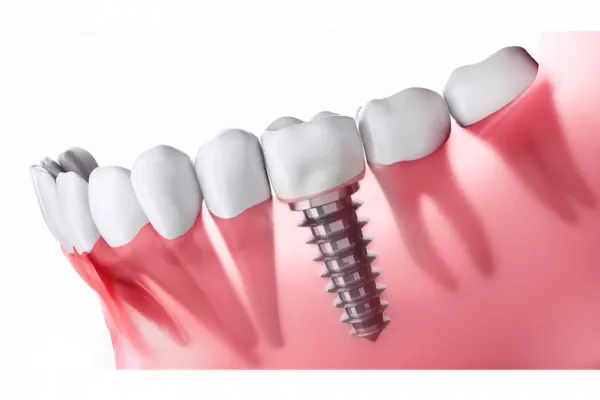
Long-Term Dental Implant Maintenance
Dental implants don't decay. The titanium fixture, the abutment, and the porcelain crown are all immune to the bacteria that cause cavities. This is one of implants' greatest advantages. But they require maintenance, perhaps even more than natural teeth, because the consequences of neglect are more severe. An infected natural tooth might be saved with a root canal. An infected implant site often results in implant loss. Understanding what can go wrong and how to prevent it is essential if you want your implant to outlast your natural teeth.
Peri-Implantitis: The Primary Risk
Peri-implantitis is inflammation and infection of the tissues surrounding an implant. It's the implant equivalent of periodontitis (gum disease) in natural teeth, but with higher stakes. Gum disease can usually be treated without losing the tooth. Peri-implantitis, if severe, often results in implant loss.
Peri-implantitis develops when bacteria colonize the soft tissue around the implant and progress into the bone. This typically happens when oral hygiene around the implant is poor, when the implant crown has an uncontoured margin trapping plaque, or when overall periodontal health is compromised.
Why Implants Are More Vulnerable
Natural teeth have periodontal ligament fibers that provide sensory feedback and help defend against infection. Implants have no periodontal ligament; they're anchored directly into bone through a process of osseointegration. This means implants lack the early warning system that natural teeth have. You might not feel pain or sensitivity until significant bone loss has already occurred.
Additionally, implant surfaces can have microscopic crevices where bacteria hide. Once bacteria establish themselves, they're harder to eliminate than bacteria in natural periodontal pockets. Prevention through excellent daily hygiene and professional maintenance is far more effective than trying to treat established peri-implantitis.
Daily Home Care
Maintaining your implant starts with the same foundation as natural teeth: excellent daily oral hygiene. However, the technique matters more, and you'll need to be more deliberate around the implant.
Brushing
Brush your implant crown just like a natural tooth, but be gentle around the soft tissue. Use a soft-bristled toothbrush and gentle pressure. Electric toothbrushes are fine; some patients find them superior because they provide consistent gentle motion without the pressure variation that hand brushing sometimes involves.
Pay particular attention to the margin where the crown meets the soft tissue. This area is most prone to plaque accumulation and peri-implantitis. Spend extra time here during each brushing.
Flossing and Interdental Cleaning
This is non-negotiable. You must clean between your implant and adjacent teeth every single day. Traditional floss works, but an interdental brush or water flosser is often superior because you have more control and can reach the critical margin area effectively.
An interdental brush (a tiny bottlebrush-style cleaner) is highly recommended for implant care. You can angle it to clean the margin directly, something traditional floss can't do as effectively.
Mouthwash
An antimicrobial rinse (chlorhexidine or cetylpyridinium chloride) once or twice daily can reduce plaque and bacteria around your implant. However, rinse alone isn't a substitute for brushing and flossing. It's a helpful adjunct to mechanical cleaning, not a replacement.
Professional Maintenance and Monitoring
Visit Dr. Mercado twice yearly for professional evaluation and cleaning. More frequent visits might be needed if you have a history of gum disease or if early signs of peri-implantitis are detected.
What Professional Visits Include
A professional visit should include:
- Visual inspection of the soft tissue around the implant for inflammation or recession
- Probing the soft tissue with a probe to measure pocket depth and assess attachment
- Radiographs (X-rays) to assess bone level and detect early bone loss
- Professional cleaning to remove plaque and calculus (hardened plaque) from the implant crown margin and surrounding soft tissue
- Discussion of any signs of peri-implantitis or other complications
If you have multiple implants or significant pre-existing periodontal disease, more frequent visits might be warranted. Dr. Mercado will recommend a schedule appropriate for your situation.
The Importance of Radiographic Monitoring
X-rays are essential for implant maintenance. They reveal bone level, which isn't visible to the naked eye. If radiographs show early bone loss around an implant, treatment can begin before the situation becomes critical. Some bone loss is normal in the first year after implant placement; 1-2mm is expected. After year two, bone should be stable. If bone loss continues, it suggests peri-implantitis developing.
What Not to Do
Just as important as what you should do is what you should avoid.
Avoid Smoking
Smoking dramatically increases peri-implantitis risk. Nicotine constricts blood vessels, impairing healing and immune function around the implant. Smokers have significantly higher implant failure rates and higher rates of peri-implantitis. If you smoke, quitting (or at minimum, reducing significantly) is essential for implant longevity.
Avoid Parafunction
Parafunction is abnormal habit: clenching, grinding, or opening jars with your teeth. These habits place excessive load on implants. Over time, they can cause the crown to break, the abutment to loosen, or the bone around the implant to be damaged. If you grind or clench, wear a night guard. If you open jars with your teeth, stop immediately.
Avoid Hard Foods
Ice, hard candy, nuts, and extremely hard foods can crack the porcelain crown. If you do crack a crown, it must be repaired or replaced, an additional cost and inconvenience. It's not a major problem, but it's easily prevented by being mindful about what you bite.
Avoid Neglecting Overall Health
Systemic conditions like diabetes and immunosuppression increase peri-implantitis risk. If you have diabetes, maintaining good glycemic control improves implant health. If you're on medications that affect immune function, inform Dr. Mercado so they can monitor more closely.
Addressing Complications Early
If you notice any of the following, contact the office immediately:
- Bleeding or suppuration (discharge) from around the implant
- Swelling or tenderness in the area
- Recession of the soft tissue exposing the abutment
- Loosening of the crown
- Change in your bite or how the crown feels
- Persistent bad taste or odor from around the implant
Early intervention can prevent severe peri-implantitis and implant loss. A patient who notices a problem at week two and seeks care often has a simple solution. A patient who ignores symptoms for months might face implant loss.
When Complications Occur
If peri-implantitis develops, treatment depends on severity. Mild to moderate cases can often be managed with improved home care, professional cleaning, antibiotic therapy, and possibly locally delivered antibiotics in the periodontal pocket.
Severe peri-implantitis with significant bone loss might require surgical intervention to access and clean the implant surface, or in worst cases, implant removal and possible replacement after the area has healed.
Prevention is infinitely better than treatment. The daily effort you invest in implant care now prevents dramatic problems later.
The Role of General Health
Your overall health affects your implant health. If you have untreated gum disease in your natural teeth, your ability to maintain an implant is compromised. If you have significant bone loss from periodontal disease, your implant is at higher risk. If you're immunosuppressed or have uncontrolled diabetes, implant maintenance is more challenging.
Ideally, you'll address these issues before getting an implant. But if you already have an implant and have developed gum disease in your natural teeth, treating the natural teeth improves your ability to maintain the implant.
Implant Longevity
Well-maintained implants routinely last 20, 30, 40+ years. Some implants placed in the 1980s are still functioning flawlessly in their original patients. The difference between implants that last decades and those that fail in years is usually maintenance. A patient with excellent daily care and regular professional visits will have implants that outlast their natural teeth.
The Bottom Line
Your implant doesn't decay, but it requires vigilance. Every single day, you must maintain excellent oral hygiene around it. Twice yearly, you must see a professional for evaluation and cleaning. You must address any signs of problems immediately. If you commit to this level of care, your implant will be an investment that pays dividends for decades. The effort is minimal compared to the reward of a fully functional, natural-looking tooth.
Have questions about implant care? Reserve a consultation with Dr. Mercado, or call (916) 448-5458.
Medical disclaimer: This article is for general educational purposes only and is not a substitute for professional dental or medical advice, diagnosis, or treatment. Individual results vary, and no specific outcome is implied or guaranteed. Always consult Dr. Mercado or another qualified healthcare provider about your specific situation. If you are experiencing a dental or medical emergency, call our office or 911.